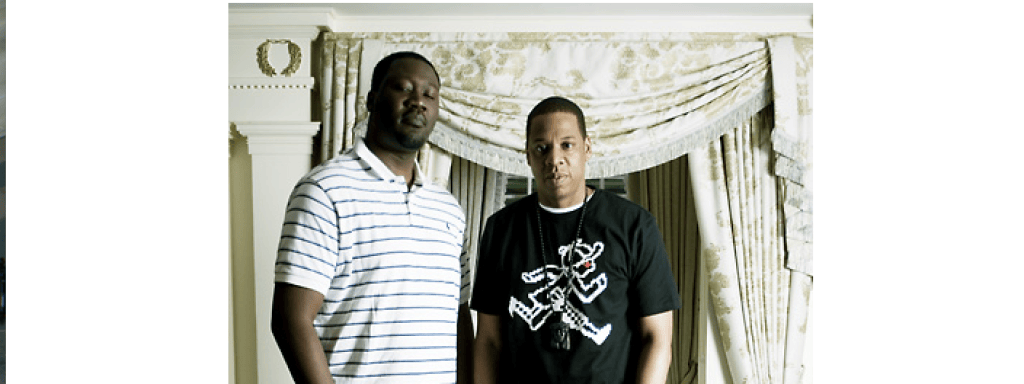
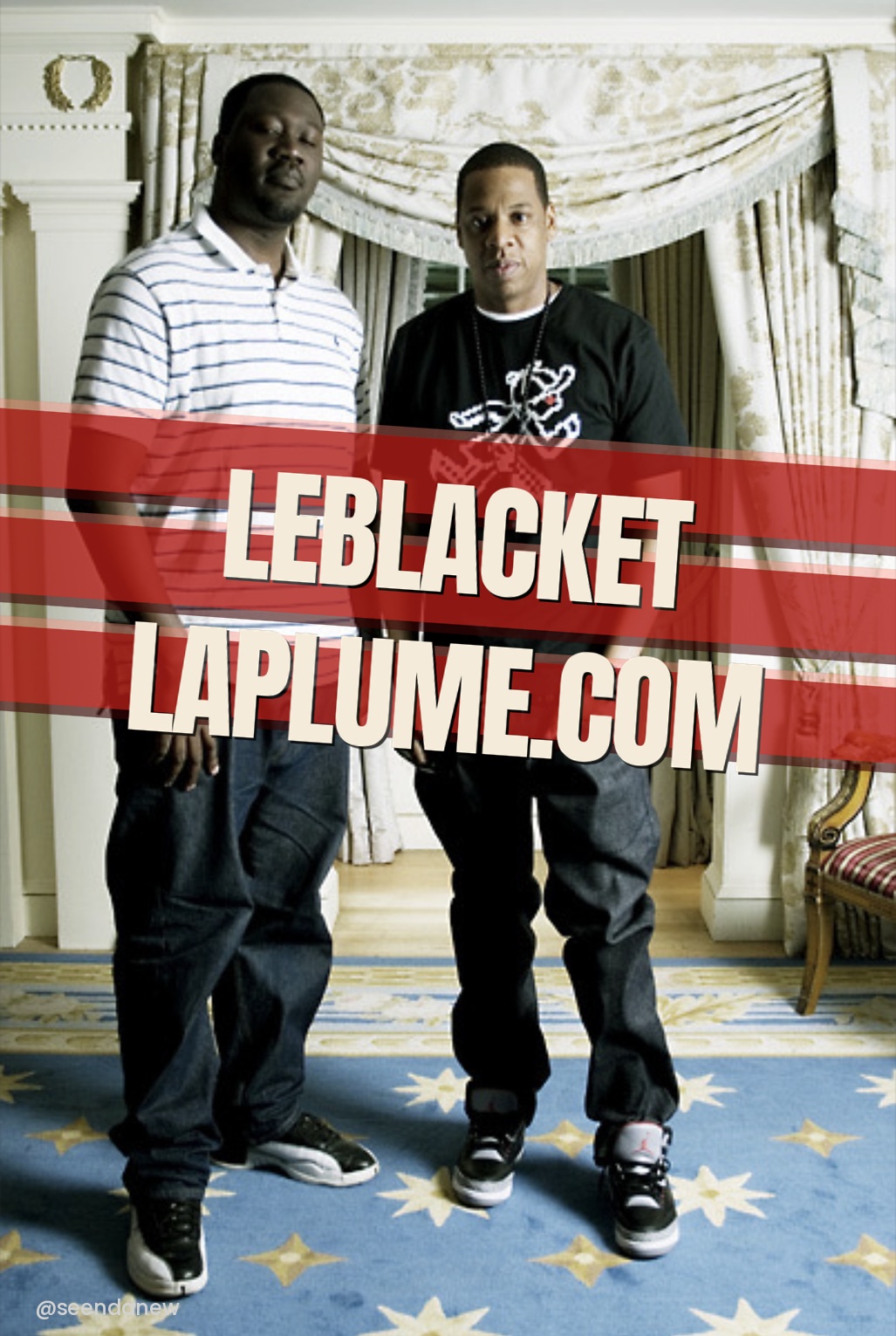
Almost 20 years ago, I met Jay-Z for one of his last promotional interviews in Europe. At the time, Shawn Carter was already “Hov,” but not yet the billionaire mogul of 2026. He was coming out of a quickly forgotten “retirement,” had recently signed with Live Nation, and was promoting his album The Blueprint 3. This encounter captures Shawn Carter at a turning point. I dove back with delight into this 20-minute audio interview, published in September 2009 in Rap Mag magazine. I’m sharing five audio excerpts (guaranteed AI-free) from Jay-Hova, along with my reflections in light of 2026. Sit back, relax.
Mister Shawn Carter introduced himself as a hustler / rapper ever since his first project, Reasonable Doubt, in 1996. After his « retirement » in 2003 (right after The Black Album) and his Def Jam stint in 2004, by 2008 he was making the leap into the real « corporate world. » For that time and especially for a rapper, that was huge. Jaÿ signed a so-called « 360 » deal with Live Nation worth $150 million, meant to launch Roc Nation. A deal that Time magazine would coin the « 150 Million Man. » It’s a structural shift: Shawn Carter stops being just a music label boss (like Birdman, Master P, J Prince and the others) without his partners Damon « Dame » Dash and Kareem « Biggs » Burke, he becomes the CEO of an entertainment company. The artist essentially buys back his own music from the industry that owned it. In 2008, Mister Shawn Carter, once again ahead of the curve, was foreshadowing the future conversations about music like catalog ownership that would shake up the industry ten years later.
THE MEETING
I’d already met Jaÿ-Z. Twice. The first time was at his press conference at Le Bourget airport for the launch of his Reebok sneaker. The second time was in London, at a Phat Farm event. This was going to be the third time. A one-on-one interview to promote his comeback !
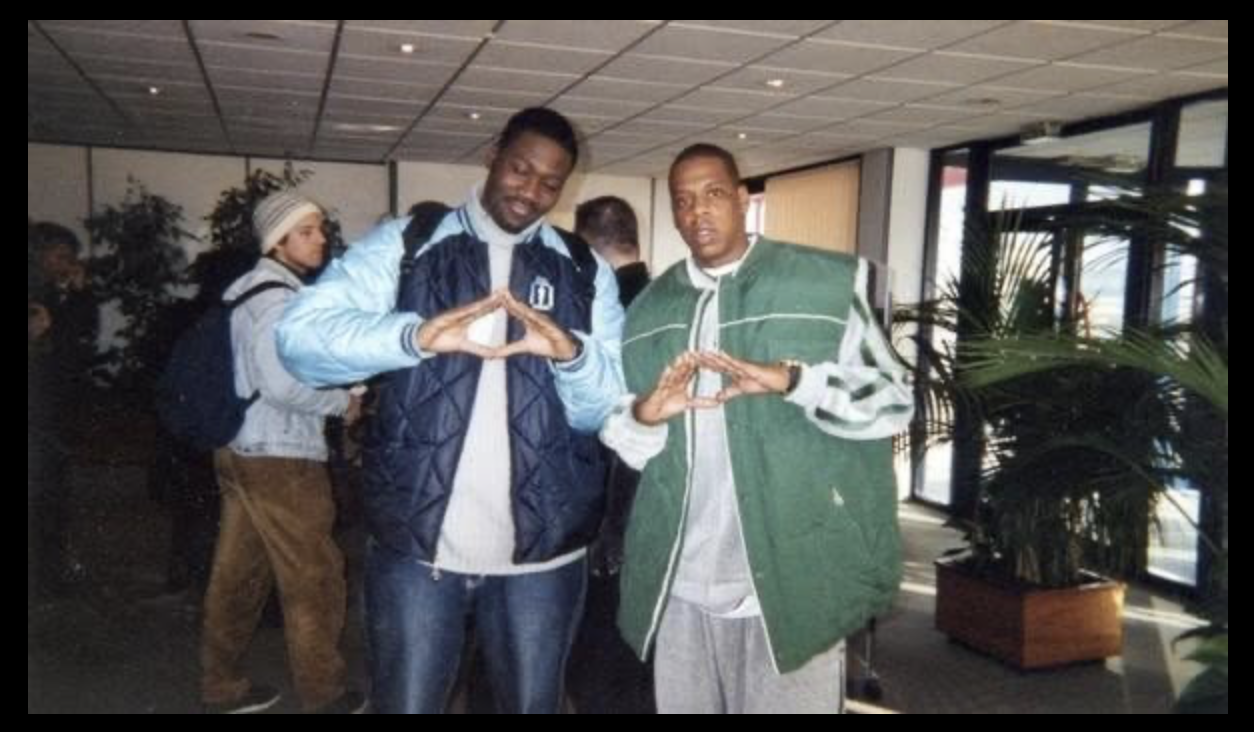
It was the record label that organized the 48-hour turnaround trip. Eurostar to London, listening to the album at the studio, a night at the hotel, the interview the next day, and back to Paris. If I remember correctly, I was accompanied by independent photographer Juliette Robert (who shot the cover and captured that photo of me with my eyes closed), a journalist from R.A.P Magazine, and my colleague Pierre Siankowski, He’s the one who, a few years later, would help me get my foot in the door at Les Inrockuptibles.
We arrive at the studio in London that same evening, 15 minutes late. French Touch, in a way… The welcome is cold: Shawn Carter, who’s been kept waiting, doesn’t hide his irritation. Damn. He plugs his black iPod (in 2009, that was a subtle stunt ) into the console. I can’t remember which journalist tries a question. « Is the album finished? » « No, not really, » he answers without looking up. « But hey, I made ‘Give It 2 Me’ from ‘The Dynasty’ at the very last minute. On ‘The Black Album,’ ‘P.S.A’ was the last track I recorded. » Translation: anything can still happen…
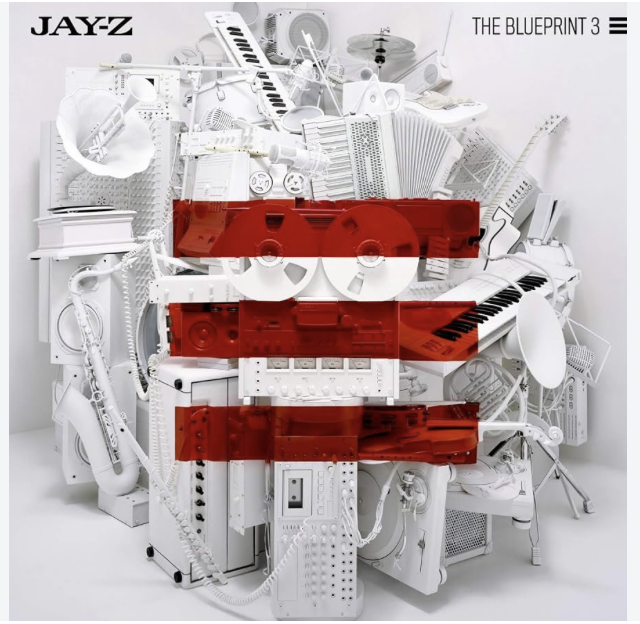
No titles of the songs, no producer names are mentioned: total secrecy. Cherry on top ? We can’t take any notes ! We listen to the intro, What We Talkin’ About (where he name-checks several « enemies » like Dame, his mentor Jaz-O, The Game, and Jim Jones), A Star Is Born featuring J. Cole, Hate with Kanye West, and a track with a distinctly odd tone recorded with Timbaland that, in the end, won’t make the album. Next comes « D.O.A., » already released a month earlier: Jaÿ-Z looks at me and slips « that one I think you already know it. » The Hip-Hop Head in me does backflips : Hov and I have something in common ! The journalist in me, on the other hand, stays cautious. I don’t have a lot on informations on BP 3. At the time, he didn’t play us Run This Town with Kanye and Riri, nor the massive On to the Next One produced by Swizz, nor Empire State of Mind, which would go on to become New York’s unofficial anthem.
The label, Warner, had promised us twenty minutes of conversation, and in exchange, we’re offering the cover. So I knew I had to widen my angle. Luckily, by 2009 Shawn Carter was already « Hov. » He’d racked up platinum albums and singles, a few classic projects and songs ( Reasonable Doubt, Blueprint 1 for me are no skips and Where I’m From should be study in college.), and had changed the game more than once. That said, at the time he hadn’t yet reached the billionaire/mogul status he has today. In fact, I think this was one of the last time he gave interviews to the European press for a music project.
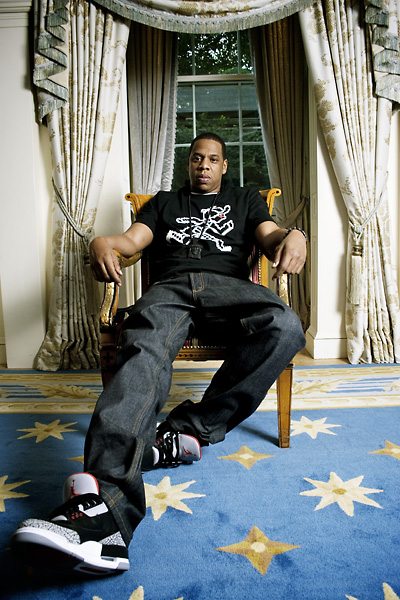
Next day is game time. I walk into the conference room. Jaÿ-Z is sitting across from me, relaxed. with a Play Cloths t-shirt (the Clipse’s brand), a raw denim jeans, and a pair Jordan 3s on his feet. He stands up, shakes my hand, introduces himself (« Shawn, nice to meet you, » as if he needed to) and pours me a glass of water. What follows is a 20-minute conversation, and here are the 5 key points from it. Oh, and forgive my Arsène Wenger accent.
1. D.O.A. Wasn’t a Diss : It Was a Correction
« I think it was important to challenge the music to move forward, you know? Because, a lot of people, because of the state of the sales and the internet and all that, you know, they start making music to get on the radio only, you know? So then all the music start sounding the same. And the Auto-Tune was working, so everyone used Auto-Tune. I’m not against Auto-Tune. I mean, I like some of the records. I like T-Pain records, I like Lil Wayne, I love Kanye records. So I’m not against Auto-Tune. What I’m saying is, not 300 people, like, not everybody. You know, some people, okay, cool. But I like diversity in anything, ’cause if we all make the same type of music, then, you know, it’s gonna get boring and stagnant, and people gonna turn away from it. »
Sixteen years later, Jaÿ looks like an artist who correctly diagnosed an algorithm problem a decade before algorithms actually ran the music industry. Swap out « radio » for « streaming playlist » and the argument still holds.
2. Roc Nation was about to become a machine. J. Cole, Rita Ora : hit and miss.
« Rita is just a star off top. The second she walks in the room, the room changes. […] J. Cole, he’s different — he’s a star in his own right, but when he walks in the room, it doesn’t change, [it’s] what he writes [that] makes him a star. He’s a magnificent writer. »
With J. Cole, he had the vision : by 2026 Jermaine is one of the biggest stars in the US. Less so with Rita Ora. After an album in 2012, she got stuck in a legal battle lasting more than five years to break her contract with the Roc. Today, Roc Nation manages more than 150 athletes (including Vinicius, LaMelo Ball, Kevin De Bruyne….) and about a hundred artists ranging from DJ Khaled, Jadakiss, A$ap Rocky, Rihanna, Clipse to rising talent Maeta.
3. Working With Kanye Had Already Changed.
« The first album, he was an unknown producer […] he didn’t have any opinion, you know? So now he’s Kanye, and he has opinions. So now we’re going back and forth […] which is cool, but it’s different for me. I’m like, ‘Ah, you’re grown up now.’ »
By the time Blueprint 3 was being recorded, Kanye West wasn’t the same beatmaker he was in 2001. Here, Jaÿ talks about him with an amused tone, almost like watching his little brother grow up. The artistic « climax » of their relationship would come two years later with the excellent joint album Watch The Throne. By 2016, eaten up by his own ego (or disease ?) , Ye would go as far as claiming Jay-Z wants to kill him. Less funny: in March 2025 on Twitter, the former Mr. Kardashian threw out horrific remarks about Jay’s kids. « Nasty work, » as New Yorkers say.
4. Retirement Was Never Really that serious.
« It was like a divorce, and then, you know, I realized I loved her more than I thought and we got back together. It’s just like a relationship. »
Seventeen years, several albums, and one Yankee Stadium residency later, the wedding is clearly still on…..
5. Breakups, beef and evolution.
« Everyone grows apart and grows at different speeds. You may be maturing and that guy may not be — he’s holding you back. You got to keep pushing forward, or he could just drag you to the couch. »
In the intro to « What We Talking About, » on this album, he name-checks his « enemies » just to say he won’t be talking about them! He cites Dame (his former partner), Jim Jones, The Game, and Jaz-O. This was too good to pass up, so I had to mention it ! His answer is very on-brand: sharp, funny (when he slips in « I’m sure there are friends you grew up with who aren’t doing what you’re doing here »), even poetic when he quotes a Kanye line from Heard’Em Say but the MC and the Brooklynite in him never back down. He always keeps an option in his back pocket. His recent freestyle at the Roots Picnic proves he’s still got the fire. In 2026, Jim Jones is still beefing with Cam’ron, The Game put out a forgettable album, and his former partner Dame Dash has lost his way…. Only Jaz-O got a proper tribute at the Yankee Stadium show.

Laisser un commentaire